Federal Aviation Administration
FAA orders Airbus A350 actuator swaps after test overloads
The rule covers A350-941 and A350-1041 jets and takes effect July 20, 2026. Operators must replace the affected parts that move the plane’s flight controls and keep the faulty ones out of service.
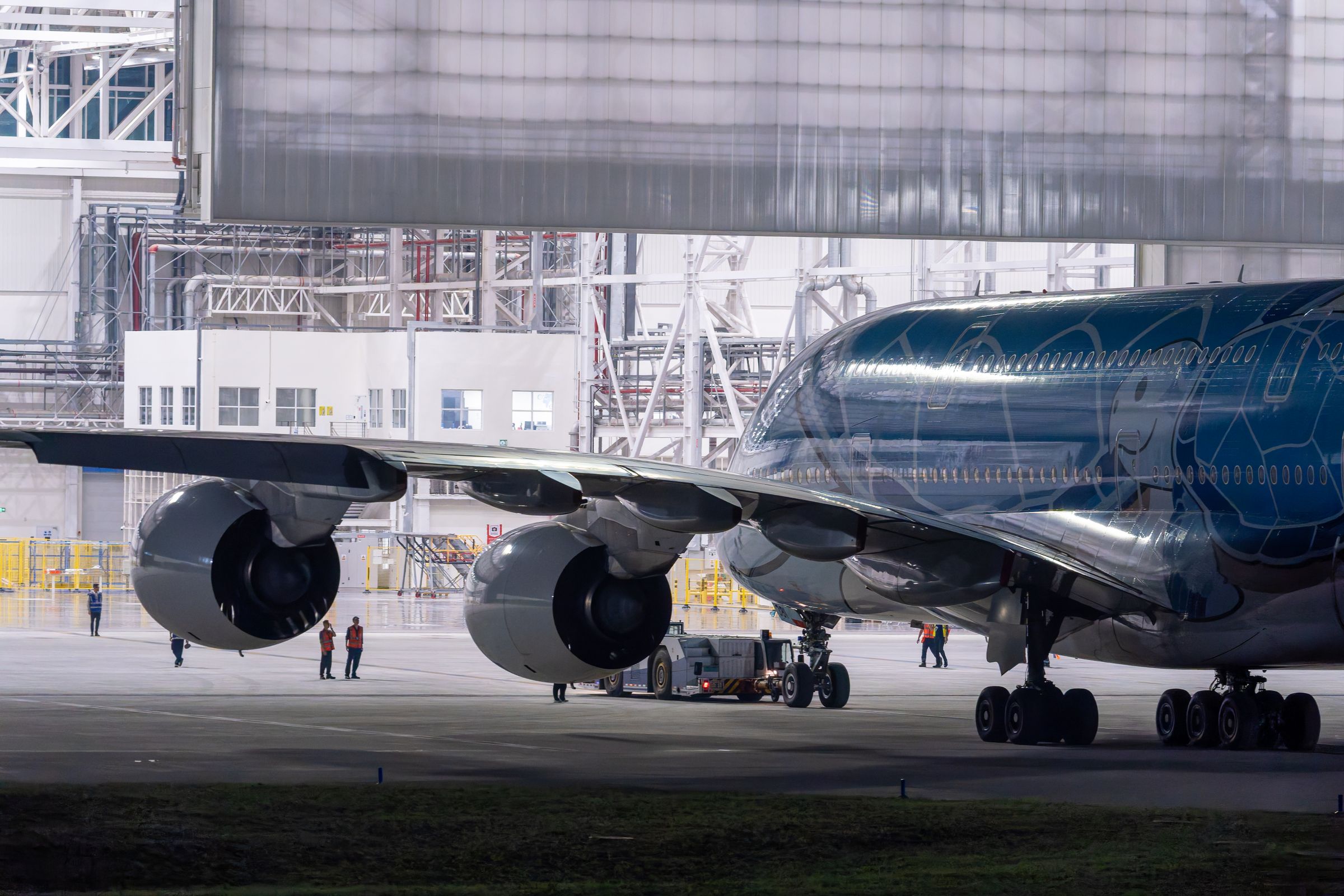
The FAA says certain Airbus SAS A350 primary flight control actuators were exposed to mechanical overloads during testing. The final rule requires replacements and bars the affected parts from being installed again. It takes effect July 20, 2026.
- Covers Airbus SAS A350-941 and A350-1041 airplanes
- FAA says some flight control actuators were mechanically overloaded during testing
- Affected parts must be replaced and cannot be installed again
- Rule takes effect July 20, 2026
- FAA estimates $850 per airplane in compliance costs
Airbus A350 operators in the United States have a new maintenance task to finish before summer ends. The Federal Aviation Administration is issuing a final rule for all Airbus SAS Model A350-941 and -1041 airplanes after finding that certain parts that move the plane’s flight controls were overloaded during acceptance testing, the checks done before service. The directive takes effect July 20, 2026.
For airlines and maintenance shops, the fix is straightforward but not optional. Affected actuators must be replaced with serviceable parts, and the parts tied to the problem cannot be installed again.
The parts the FAA wants out
The directive covers servo controls, electrical backup hydraulic actuators and electro-hydrostatic actuators. The FAA says it is acting to address an unsafe condition on the affected Airbus airplanes because a failure could mean loss of control surfaces or hydraulic system loss, either of which could reduce the crew’s control of the jet.
That is the kind of problem aviation rules are built to catch early, before a defect shows up in service. The agency is not grounding the A350 fleet, but it is forcing operators to sort the affected parts from the rest of their inventory and keep them out of circulation.
What operators will notice in the hangar
The FAA estimates the directive affects 38 U.S.-registered airplanes. Its compliance estimate is about $850 per airplane, or $32,300 across U.S. operators, based on 10 work-hours at $85 an hour and no parts cost.
That puts the burden mostly on maintenance records and parts control rather than on passengers sitting in the cabin. But for airlines that rely on the A350-941 and -1041, it is another reminder that a problem discovered in testing can still reach deep into day-to-day operations once regulators decide the risk needs a hard fix.