Civil-Rights Rules
USDA drops disparate-impact claims from farm funding rules
The final rule keeps Title VI protections in place, but complaints now have to show intentional discrimination. USDA says the rewrite matches Justice Department rules and Executive Order 14281.
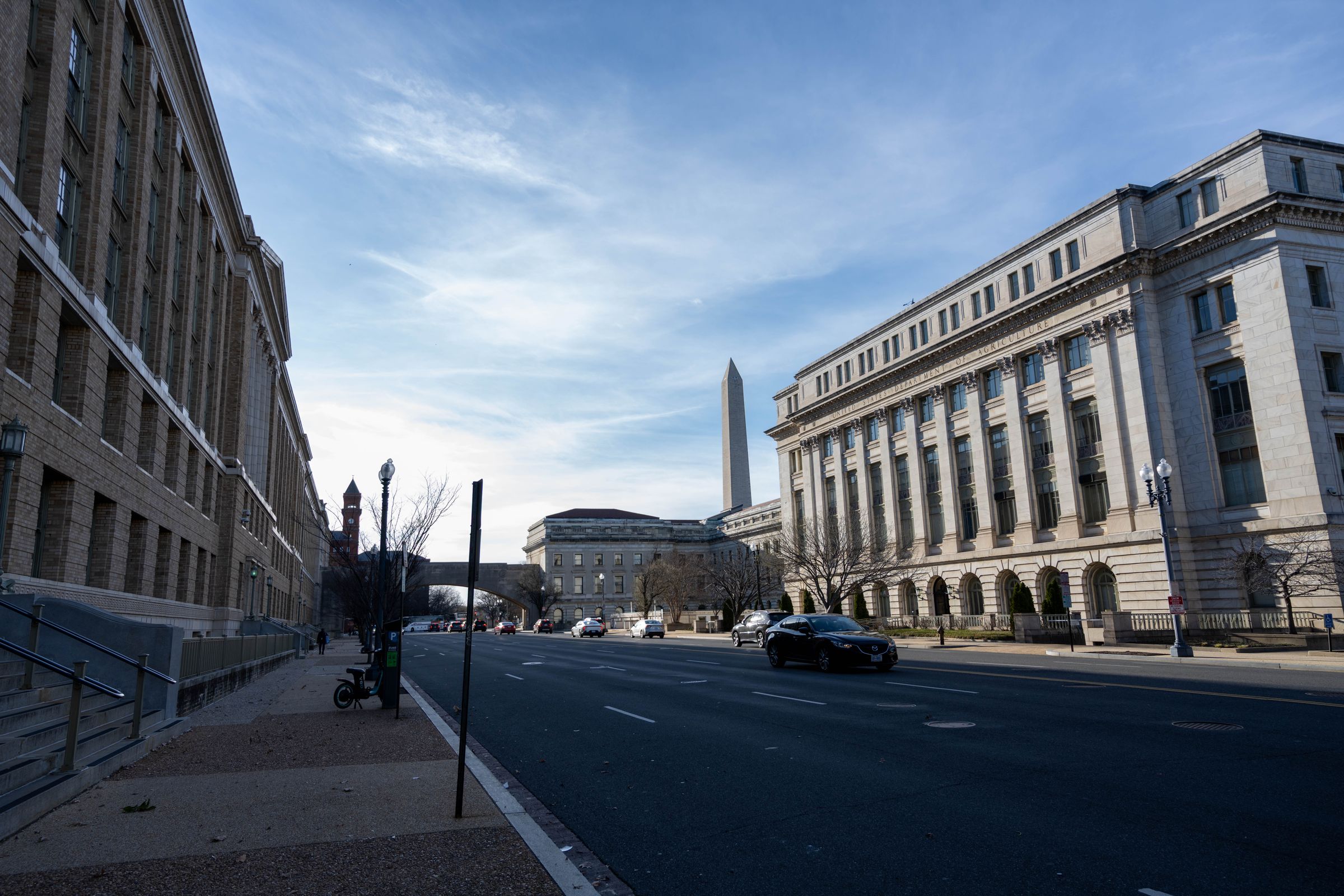
USDA has narrowed the civil-rights rules that cover its funding recipients. The agency’s final rule removes disparate-impact liability from Title VI, so claims will turn on intent instead of unequal effects alone.
- USDA dropped disparate-impact liability from its Title VI rules.
- Complaints now have to focus on intentional discrimination, not just unequal effects.
- The department says the change aligns with Justice Department rules and Executive Order 14281.
- USDA says the rewrite should cut compliance costs for funding recipients.
- Farmers, schools, local agencies and other groups that depend on Agriculture Department money now face a narrower civil-rights rulebook
Farmers, schools, local agencies and other groups that depend on Agriculture Department money now face a narrower civil-rights rulebook. In Washington, USDA has finalized a rule that rewrites its Title VI of the Civil Rights Act of 1964 regulations so they no longer recognize disparate-impact liability, the legal theory that can reach a policy because of its effects even when no one intended to discriminate. The change applies to 7 CFR part 15, including provisions tied to employment practices for recipients of federal financial assistance.
That does not erase Title VI protections. It changes the kind of case USDA says it will police. Under the new rule, the department is steering its enforcement toward intentional discrimination, which means people bringing complaints will need to point to discriminatory purpose rather than only unequal outcomes. For recipients, that is not an abstract legal refinement. It can shape how quickly a complaint gets traction, how much compliance work is expected, and what kinds of policies get scrutinized in the first place.
Intent, not impact
The distinction between disparate impact and intentional discrimination is the center of the rewrite. Disparate-impact liability lets regulators look at whether a facially neutral practice falls harder on one group than another. A policy can be written in neutral terms and still trigger a civil-rights problem if its real-world effects are uneven enough. USDA is now saying its Title VI regulations should not run that far.
That move narrows the department’s reach inside the programs it funds. Instead of asking whether a rule or practice produced unequal results, the agency is recasting its standard around whether a recipient meant to discriminate. For people who file complaints, that shifts the burden of the argument. For USDA recipients, it means the old worry, that a neutral rule might be second-guessed because of its downstream effects, is less likely to drive the agency’s review under this framework.
Inside the legal argument
USDA says the change is not just a policy preference. The department says the older approach raised statutory and constitutional concerns, and that its civil-rights rules should stay closer to the way Title VI itself is written. Title VI of the Civil Rights Act of 1964 is built to stop discrimination in federally funded programs, and USDA’s position is that the law should be read to reach intentional discrimination rather than conduct with an unintentional disparate impact.
That framing matters because it places the department on firmer ground, at least as USDA sees it, by tightening the link between the regulation and the underlying statute. The rule also says it is being aligned with the Department of Justice’s regulations and with Executive Order 14281. In plain English, USDA is bringing its own handbook into line with a narrower federal approach already reflected elsewhere in the government.
Where the change lands
The people most likely to feel the new standard are the organizations that touch USDA funding every day. That includes recipients of federal financial assistance across agriculture, nutrition and related programs, as well as workplaces covered by the department’s employment-practices provisions. Those groups often have to decide whether a policy, screening rule or workplace practice needs to be revised before it becomes a problem. A narrower civil-rights test changes that calculus.
The department also says the rewrite will reduce compliance costs. That is the practical promise tucked inside the legal language: fewer obligations tied to disparate-impact theories and a more focused review of whether discrimination was intentional. For regulators, it means a smaller lens. For recipients, it means fewer reasons to treat every uneven outcome as a possible civil-rights violation under USDA’s Title VI rules. The result is not less federal oversight, but a different kind of oversight.
The complaint path after the rewrite
For people filing discrimination complaints, the new rule changes what has to be shown. A policy that produces unequal results may still feel unfair, but under USDA’s revised Title VI framework, that alone is no longer enough to carry the theory the department is dropping. The complaint has to connect the outcome to intent. That is a harder, more traditional civil-rights claim, and one that narrows the runway for challenges based only on effects.
The department’s action does not shut the door on enforcement, and it does not declare all unequal outcomes harmless. It redraws the line so USDA is policing intentional discrimination rather than broader theories about neutral policies with uneven consequences. In the federal civil-rights world, that is a meaningful turn. It is the kind of change that can be felt most by the people who never read the regulation itself: the farmer, school district, contractor or nonprofit deciding whether a rule is safe as written, and the person deciding whether a complaint can survive the first look.
A narrower rulebook with wider reach
This is the kind of federal change that does not announce itself with a price tag or a new benefit, but it still reaches deep into daily administration. USDA’s Title VI rules sit behind a broad set of programs, and the department is telling recipients to expect a more limited civil-rights standard from here on. The logic is simple even if the law is not: if the agency is looking for intent, then a lot of disputes over effect will never become the same kind of case they might have been before.
That is why the rewrite matters beyond Washington. It affects how recipients think about risk, how complainants frame a case and how civil-rights staff inside the department draw their lines. USDA has not ended Title VI enforcement. It has narrowed the lens through which that enforcement works, and in civil-rights law, the lens can change the outcome as much as the rule itself.