Broadband deployment and pole attachments
Utility poles can slow broadband and raise costs
Aerial fiber is often the cheaper, faster way to connect homes. But pole access rules are patchwork, and delays can throw off broadband builds that need to move on BEAD deadlines.
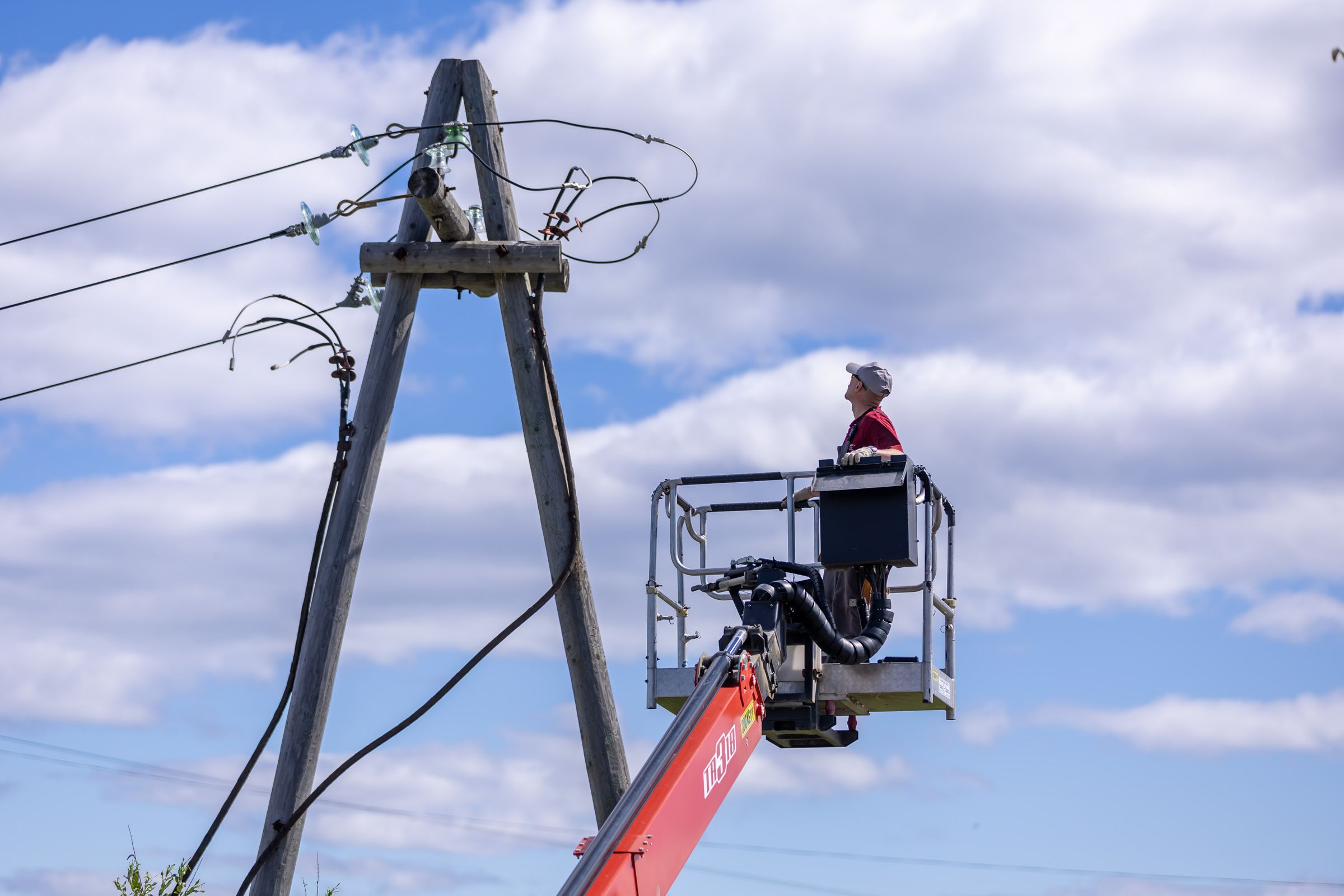
A broadband build can stall at the utility pole outside the house. That can delay service, add costs and make it harder for providers to meet grant deadlines in rural and underserved areas.
- Pole attachments can make broadband builds faster and cheaper, but only if providers get access to poles.
- Aerial fiber is often preferred over trenching because it can avoid the cost and disruption of underground work.
- The FCC, states and exempt pole owners all play different roles in a fragmented rules system.
- Disputes over cost and timing can delay service for homes waiting on broadband.
- BEAD timelines make pole delays more important because projects have less room to absorb setbacks.
At the federal level, a broadband build can slow down at a place most people never think about: the utility pole outside the house. For households still waiting on service, that can mean the difference between getting connected soon and waiting even longer. The issue is pole attachment, which means hanging telecommunications equipment on existing utility poles. In many areas, it is one of the most efficient ways to extend broadband, especially where fiber is the goal and the project needs to move fast.
That matters because broadband is not just about entertainment. It supports work, school, telemedicine, video calls and other daily tasks. Consumers usually care most about the result. They want a connection that is fast and dependable. Fiber is often favored because it offers high speeds and low latency, which is the lag that can make a call freeze or a work meeting feel unstable. But getting fiber to a home is not always a matter of digging a trench. Often, the simpler route is to use the infrastructure already standing along roads and streets.
How fiber gets to a home
Broadband providers generally have two choices for fixed broadband, meaning internet service that is not mobile. They can run fiber underground, or they can hang it on poles. Both options can work. They do not cost the same, and they do not move at the same pace. In many places, aerial construction is cheaper than burying cable. It can also avoid some of the disruption that comes with trenching and subsurface construction.
That is why pole access can shape the economics of a project from the start. If a provider can use existing poles, the build may be faster and less expensive. If it cannot, the project may need a different design or a different route. Underground construction can be especially hard in areas with rugged terrain or other geographic barriers. In those places, poles are not just convenient. They may be the practical way to reach homes at all.
Pole attachment is more than simply clipping a line onto a pole. A provider has to work with the pole owner, usually a utility, to fit new equipment into a crowded system that already carries electric and communications lines. Space is limited. Engineering matters. So do the costs of making a pole ready for new use.
A patchwork of rules
The legal rules around pole attachments are layered and uneven. Section 224 of the Communications Act of 1934 gives the Federal Communications Commission, or FCC, authority over pole attachment rates, terms and conditions in some cases. The law also gives certain providers a right to nondiscriminatory access to poles owned or controlled by a utility. But that federal framework does not cover every pole owner in the same way.
Some pole owners, including municipalities, electric cooperatives and public utilities, are exempt from FCC pole attachment rules. Investor-owned utilities and private companies are generally subject to them. On top of that, some states regulate pole attachments themselves. That creates a patchwork system, and that patchwork can make broadband deployment slower and harder to predict.
The current rules also turn on what kind of service a provider offers. Under the FCC’s current treatment, broadband itself is classified as an information service, so broadband-only providers do not automatically get the same Section 224 protections that cable and telecommunications providers receive. Providers that also offer cable or telecommunications service can fall within the federal rules. That distinction matters because it can affect who has a clear path onto the pole and who has to negotiate from scratch.
Where delays show up
The practical problem is not always dramatic. Often it starts with a request, a survey and an estimate of what it will cost to make the pole ready. Those make-ready costs cover the work needed to move other lines or equipment so a new attachment can fit. If the provider accepts the estimate, it may pay those costs up front and wait for the work to be done. In some cases that process goes smoothly. In others, it does not.
Disagreements can arise over costs, access timing and how long it will take to prepare the pole. That is where the issue becomes more than a back-office fight between companies. A delay on one pole can ripple through a larger build. A project that was supposed to be straightforward can lose time and money while the parties work through access problems.
For consumers, those delays can leave service out of reach even after a broadband project has been announced. For providers, delays can make a project less viable, especially in places where the customer base is small and the budget is tight. Aerial fiber may look like the lower-cost option on paper. If the pole process stalls, that advantage can shrink quickly.
Why BEAD raises the pressure
The stakes are higher because of the Broadband Equity, Access, and Deployment Program, or BEAD, the federal program meant to help close the digital divide. BEAD funding comes with grant-mandated timelines and finite award amounts. That means broadband providers have less room to absorb delays than they might in a looser funding environment. When access to poles slows down, the clock does not stop.
The report says pole attachment issues are especially important in BEAD implementation because a provider cannot always wait for a drawn-out negotiation and still keep a project on schedule. If the most affordable route depends on pole access that arrives late, the project may have to change shape. It may need a new engineering plan, a different construction method or a different budget. Any of those choices can affect whether a project still works financially.
That is why pole attachment can end up deciding which homes get connected first. It is not the most visible part of broadband policy, but it can be one of the most consequential. A community can have funding on paper and still wait if the infrastructure access question is not resolved in time.
What changes are on the table
The broader policy question is how to speed deployment without ignoring the interests of pole owners. The report says one idea is to set deadlines for pole access so projects do not sit in limbo. Another is to reconsider the exemption for certain pole owners under Section 224. A different option would be to keep the current framework and let the FCC and the states continue to manage the issue under existing law.
There is also a bigger push for a more uniform national approach. Supporters of that idea argue that a single, clearer set of rules could reduce confusion and help broadband providers plan projects with more confidence. Others are likely to focus on the burdens that new rules could place on pole owners, who have to manage safety, engineering and the many uses of shared infrastructure. The report does not settle that debate. It shows why the issue keeps coming back.
For most households, the policy details only matter when service is late. Still, the path from federal broadband money to a live internet connection often runs through this narrow, overlooked step. The pole outside the house can look ordinary. In broadband deployment, it can decide who waits and who gets online first.