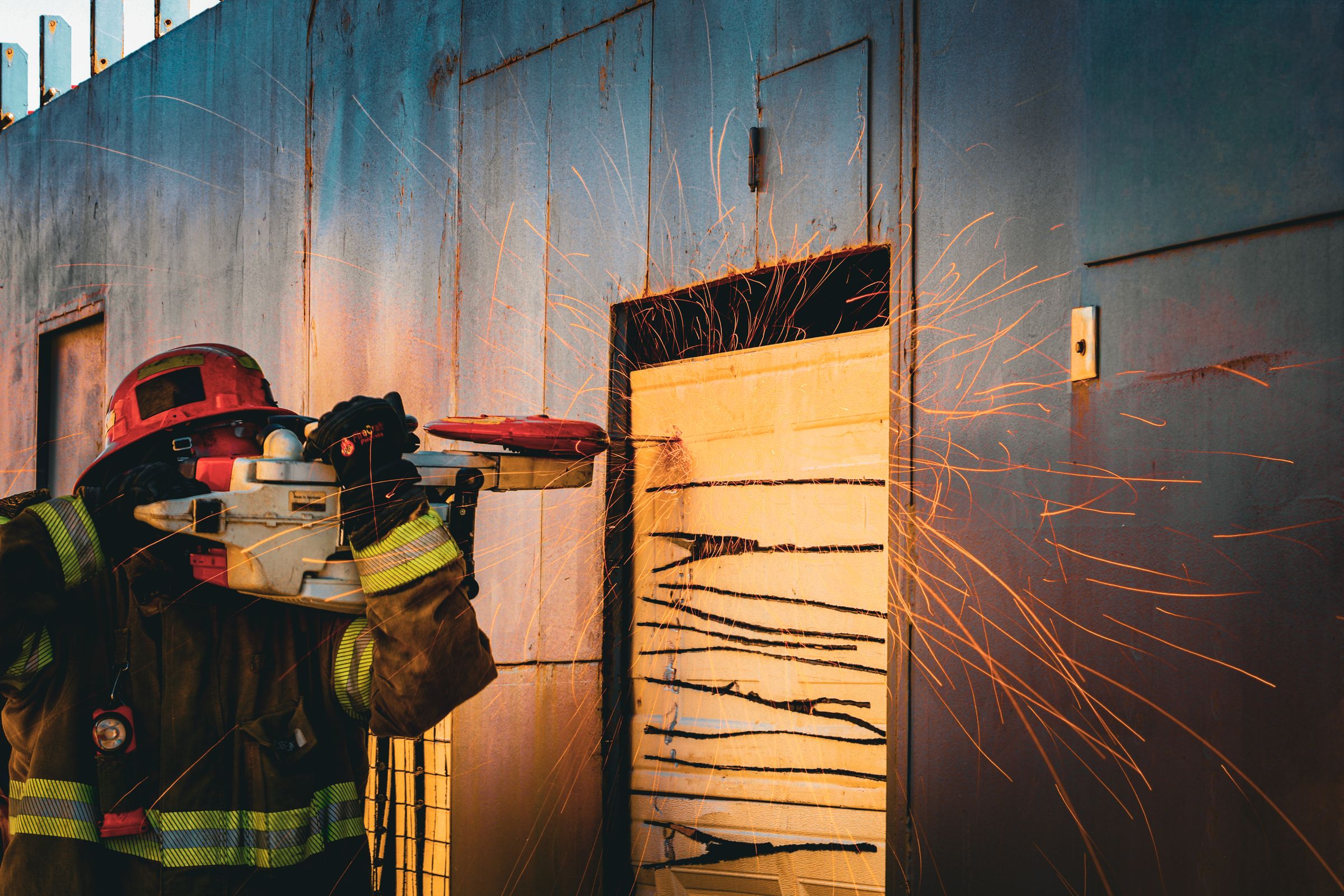
A California proposal would create a new state fund for incarcerated firefighters and use it to support training, education and job pathways after release. SB 423 is aimed at people who work on wildfire suppression, fire prevention and other emergency response duties while serving time.
The bill would call the account the Incarcerated Firefighter Community Reinvestment Fund. It would be run by the Department of Finance, working with the California Department of Corrections and Rehabilitation, or CDCR, and the California Department of Forestry and Fire Protection, known as CAL FIRE. The idea is simple. If the state saves money by using incarcerated firefighters instead of nonincarcerated firefighters for some work, part of that savings would be tracked and put back into the people doing the work.
How the fund would work
Under SB 423, the Department of Finance would begin calculating the state savings tied to incarcerated firefighters in wildfire suppression, fire prevention and other emergency response activities starting July 1, 2026. That calculation would be based on specified data and would compare the use of incarcerated firefighters with the use of nonincarcerated firefighters for those same duties.
Whatever amount Finance determines for the prior fiscal year would be transferred into the new fund. In plain terms, the bill tries to link the financial benefit to a reinvestment stream. That could matter to incarcerated firefighters because it creates a formal way for the state to direct some of the value of their labor toward their own training and future work opportunities.
The bill also would require annual public reporting. Finance would have to report to the Legislature each year on the cost savings and on recidivism, which is the rate at which people return to prison after release. Finance, CDCR and CAL FIRE would also have to post the report on their websites, making the information easier for the public to find.
Education that leads to credentials
SB 423 goes beyond fire crews and funding. It would require CDCR and the office of the Chancellor of the California Community Colleges to expand access to community college classes that lead to degrees and certificates in selected subjects, including fire science. The effort would cover people serving in California Conservation Corps handcrews and people in institutional firehouses.
That matters because many incarcerated firefighters learn through hands-on work but do not always have a clean path to classroom credit or formal credentials. The bill would connect that work to community college instruction, which could help people leave custody with more than experience alone.
For readers who may not know the term, fire science is the study of fire behavior, firefighting tactics and related safety practices. The proposal would not just keep the training informal. It would try to make it count in a system that recognizes degrees and certificates.
Standardized training and apprenticeship credit
The bill also would require CDCR, working with the Chancellor’s office and the Academic Senate for California Community Colleges, to create a uniform fire science and emergency medical technician curriculum for all correctional facilities that offer firefighting or emergency medical technician programs. EMT stands for emergency medical technician. A uniform curriculum would mean the basic instruction is not left to chance from one site to another.
SB 423 would further require CDCR and other partners, including CAL FIRE, to develop a tiered training program with modules for advanced leadership. That suggests a ladder inside the system, not just entry-level work. People could move through more advanced training as they build skills and experience.
The Division of Apprenticeship Standards would also be pulled in. It would have to work with CDCR and others to create a firefighter apprenticeship framework that ties in-custody training hours to recognized apprenticeship credits. Those credits could count toward advanced firefighting licenses or certifications. In practical terms, the bill tries to turn prison fire work into training that is recognized outside the prison system.
Training sites with a regional reach
SB 423 names specific places where the training would deepen. It would require CDCR, in collaboration with CAL FIRE and the California Conservation Corps, to operate an enhanced firefighter training and certification program at the Ventura Training Center in Ventura County, or at a successor site.
If the Legislature provides funding, the bill would also require an enhanced firefighter training and certification program at a facility in the northern part of the state. That detail suggests the author wants the training to reach beyond one region and stay in place even if a particular site changes.
The bill would also require CDCR, in consultation with CAL FIRE, to report each year until January 1, 2030, on the program. That report would include, among other things, the number of people enrolled and recommendations to improve or expand the effort. It gives lawmakers a running picture of how the program is functioning instead of a one-time snapshot.
A route after release
The reentry piece is one of the clearest parts of the proposal. SB 423 would require CDCR, working with local fire departments, accredited firefighter academies and other partners, to create a postrelease hiring program for formerly incarcerated firefighters. The bill would also spell out procedures for those hires.
That could matter for people who complete fire training in custody but then struggle to find a way into the field after release. The proposal does not promise a job to everyone. It does, however, try to make a documented route from in-custody training to fire employment more visible and more usable.
SB 423 would also authorize the fire chief of the County of Los Angeles Fire Department, if funding is appropriated, to establish the Local Handcrew Pilot Program for five years. Formerly incarcerated people who have successfully completed specified programs, training or work could be enrolled in the pilot. The fire chief would have to develop metrics, use them to judge whether the pilot is working, and report the findings to the Legislature and the governor.
Sources
Synthesized from 27 verified citationsSynthesized by AI linked to original documents.