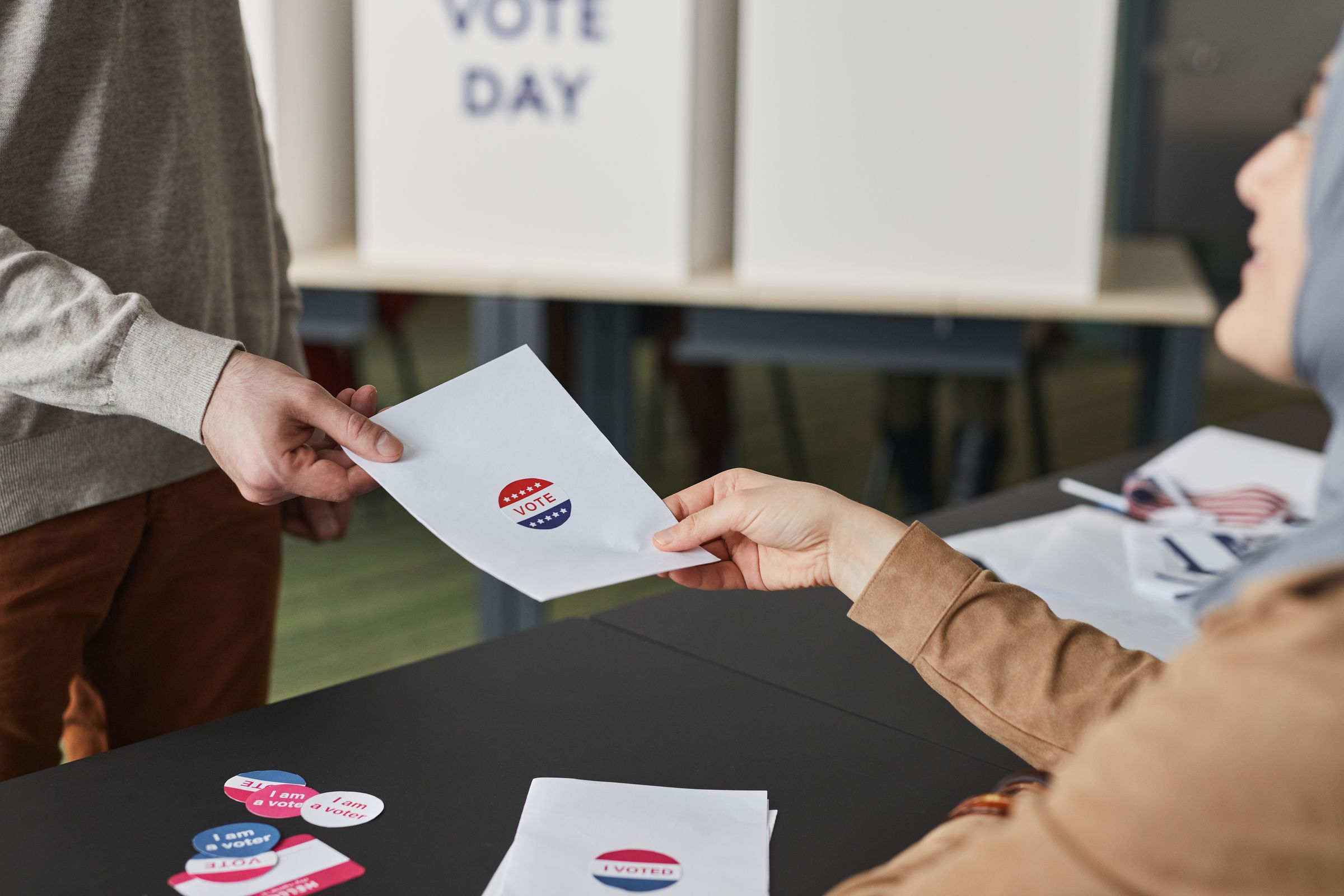
California voters would get a tighter buffer around polling places under AB 2230. The bill would bar elections officials from letting immigration-enforcement or other federal law-enforcement personnel set up right by a voting site, and it would make unauthorized law-enforcement-style presence nearby a felony.
The point is to keep the space around the ballot box from feeling like a checkpoint. A voter should be walking into a civic place, not sizing up whether someone at the door is there to watch, warn or intimidate.
Clothing can count, too
Existing law already bars certain armed or uniformed people from being stationed near polling places without authorization. AB 2230 would go further, reaching anyone wearing clothing or insignia that reasonably conveys an association with local, state or federal law enforcement.
That matters because intimidation does not always depend on a badge. Sometimes the look of authority is enough to chill people who are already uneasy about voting, especially when the person at the door seems to belong to the government but is not there to help the election run.
The narrow exceptions
Peace officers would still be allowed to respond to a presently occurring violent crime, address an immediate threat to life or health, or vote themselves. Outside those situations, elections officials could not authorize immigration-enforcement or federal law-enforcement personnel to be stationed in the immediate vicinity.
Recorded votes show the bill cleared a floor vote.
Sources
Synthesized from 8 verified citationsSynthesized by AI linked to original documents.