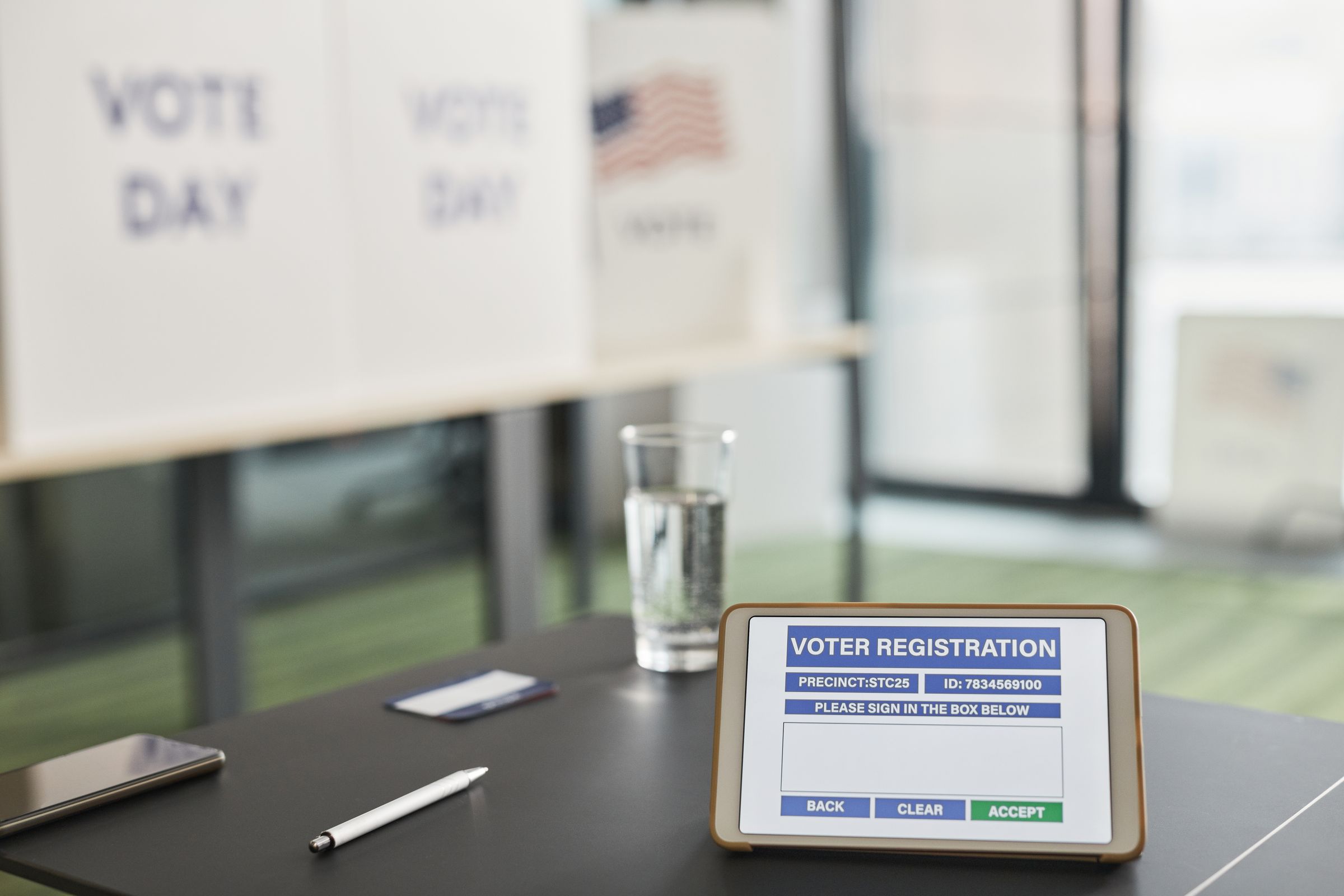
In the federal Senate, a bill would turn voter-registration information into a condition for extra election-security money. States that want the grant would have to provide that information to the Department of Homeland Security, or DHS, putting election administrators in the middle of a new federal tradeoff.
The measure comes from Senators Marsha Blackburn of Tennessee and Lindsey Graham of South Carolina, both Republicans. It does not spell out how much additional money would be available, but it makes the data exchange the gatekeeper.
The data bargain
That matters because election-security money is usually meant for the work behind the scenes, not for headlines. It can help states protect registration systems, strengthen cyber defenses and keep election administration moving. S. 4659 would make that support conditional on sharing voter-registration information with DHS.
The bill does not say which pieces of registration data DHS would receive, or how the department would use them. That leaves the central exchange clear enough for readers: more federal support in return for information states already collect and guard closely.
The squeeze on election offices
The immediate pressure would fall on state election offices, which would have to decide whether the funding is worth the new requirement. Voters would feel it indirectly, through the way states store, share and protect their records.
Because the proposal is built around funding leverage rather than a broad rewrite of election law, it would not change who can vote or how ballots are cast. It would change the bargain around the records behind the system.
Sources
Synthesized from 7 verified citationsSynthesized by AI linked to original documents.