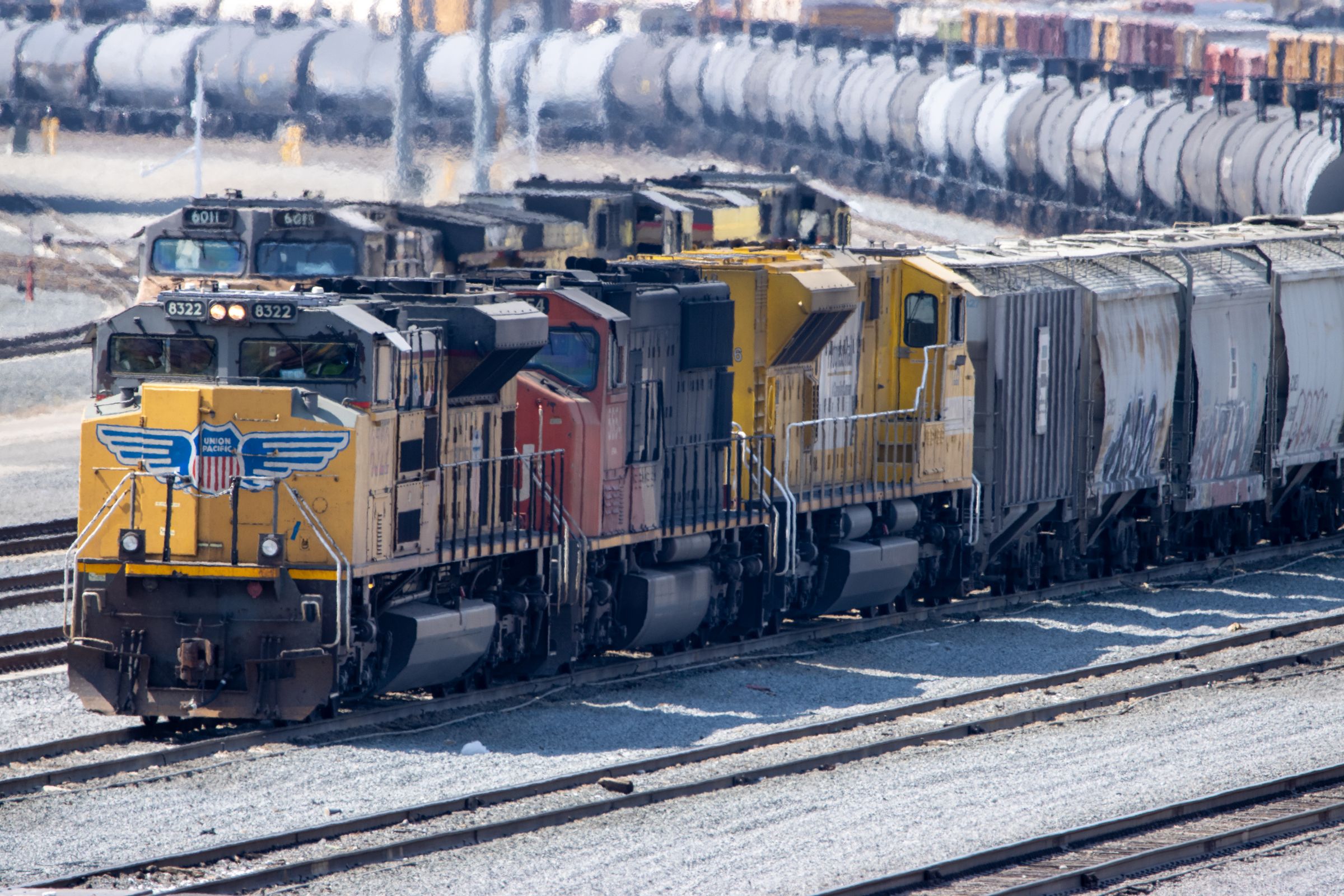
For shippers that depend on trains to move grain, fuel, raw materials and finished goods across the country, a Union Pacific-Norfolk Southern merger would not just be a bigger logo on the side of a locomotive. It would change how many national railroads are left to choose from.
Union Pacific Railroad announced on July 29, 2025, that it had agreed to acquire Norfolk Southern Railway. At the federal level, the deal would cut the number of U.S. Class I railroads from four to three, narrowing the field of the biggest freight carriers in the country.
Why four carriers matter
Class I railroads are the largest freight railroads, defined by annual operating revenues of $900 million or more in inflation-adjusted 2019 dollars. Right now, the U.S. group is Union Pacific, BNSF, CSX and Norfolk Southern.
That matters because a smaller pool of big carriers can change the balance of power for long-distance shipping. When there are fewer railroads at the top, shippers have fewer places to turn for competitive routes and pricing, especially on lanes that depend on one railroad's track network.
How the tracks get reshaped
Rail merger history offers the clearest clue to what can happen next. Past deals have let surviving railroads consolidate by abandoning or selling parallel lines, trimming routes that overlapped. End-to-end mergers, by contrast, have let railroads stitch together longer systems and carry traffic over greater distances.
That is why this proposal matters beyond the size of the companies involved. It could alter where freight has more than one route, where it effectively has one, and where the remaining carriers hold the leverage in the national network.
Beyond the U.S. map
The freight picture does not stop at the border. Two Canadian Class I railroads also have U.S. connections, with transcontinental service across southern Canada, track in the United States and routes that connect to northern-tier ports and into Mexico.
That cross-border reach means the network is already bigger than a simple four-carrier count suggests. But if Union Pacific absorbs Norfolk Southern, the U.S. side of that system would be more concentrated than it is now.
Sources
Synthesized from 15 verified citationsSynthesized by AI linked to original documents.