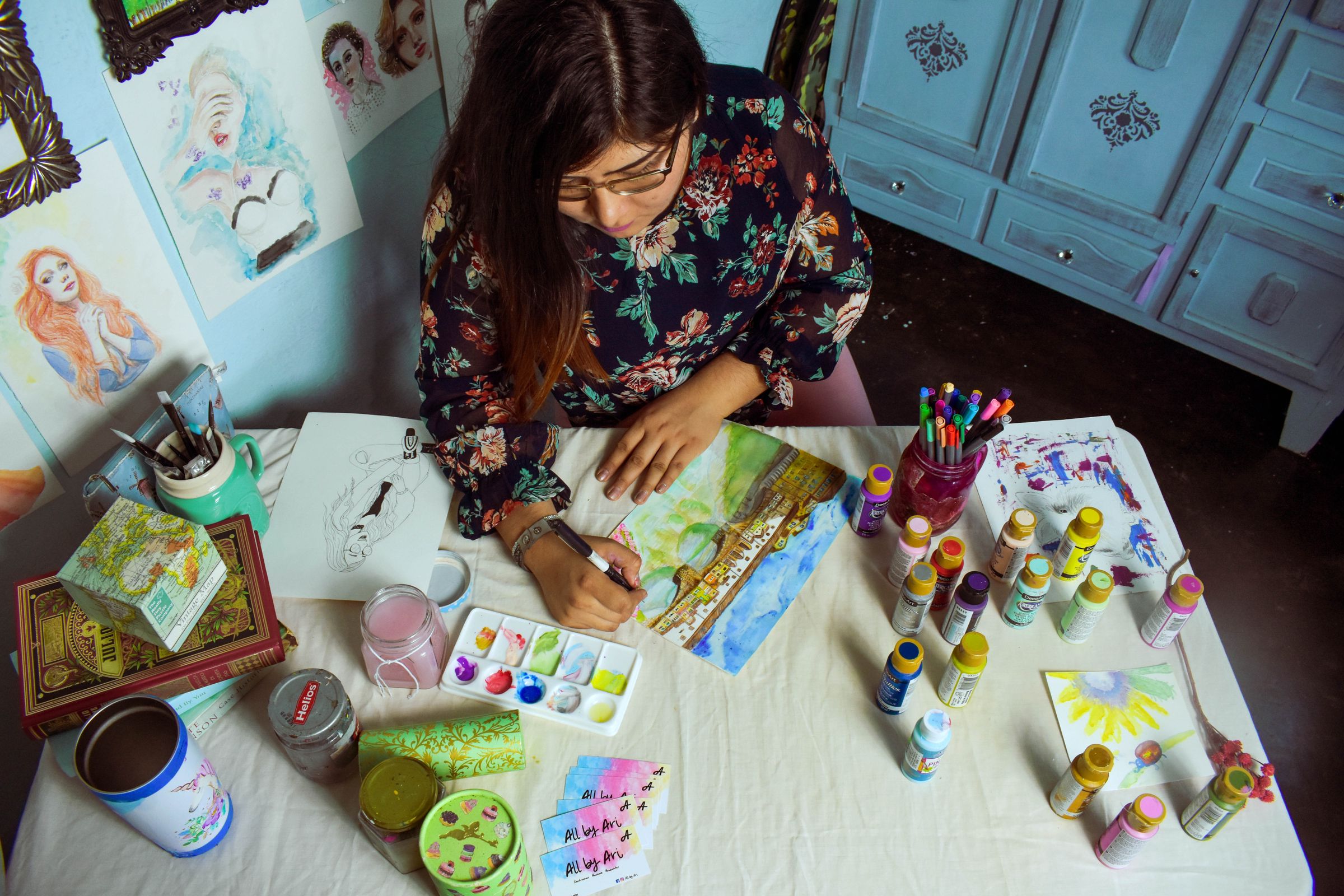
For visual artists, the worry is not only that someone copies a painting or illustration outright. It is that a brand, publisher or other business borrows the whole look so closely that the result becomes a stand-in for the original creator. A bill in the U.S. House would give artists a new federal right to control that kind of commercial style impersonation.
In plain English, the proposal would let artists decide whether a stylistic knockoff can be commercially exploited or publicly distributed in or affecting interstate commerce. That means the fight is not over casual imitation or artistic influence in the abstract. It is over market use, where a copied style can show up in an ad campaign, product image or other paid appearance.
The business line
Rep. Beth Van Duyne, a Texas Republican, introduced H.R. 9112 on June 2, 2026. Reps. Yvette Clarke, a New York Democrat, and Valerie Foushee, a North Carolina Democrat, are cosponsors.
The bill’s target is narrow and broad at the same time. It does not say artists own every echo of their style. But it would give them an exclusive right to authorize the commercial exploitation or public distribution of a stylistic impersonation of that artist, which puts licensing deals and commissioned content under a brighter legal light.
The definition problem
The text does not spell out exactly how close a work must be before it counts as a stylistic impersonation, or how far the new right would reach in practice. Those gaps matter because the difference between inspiration and a legally risky imitation is often the whole case.
For visual creators, the bill could offer a new tool against commercial lookalikes. For advertisers, galleries and publishers, it would mean another permission check before using a style that feels too much like someone else’s signature.
Sources
Synthesized from 7 verified citationsSynthesized by AI linked to original documents.